
PROGRAM
PURPOSE
This training program was
structured to prepare graduates of GIDAN BEGE, City Ministries, with the
necessary entrepreneurial skills and mentorship to achieve financial
independence after their journey at GIDAN BEGE. This program prepared them to
practically cope with life's challenges through entrepreneurship and provided
them with the necessary skills to succeed in their chosen endeavours.
PROGRAM
STRUCTURE
This program is designed with the
understanding of the peculiarity of the Nigerian business environment and the
emerging challenges and opportunities for young entrepreneurs’ success. After
graduating from GIDAN BEGE, the young, inexperienced graduates are allowed to
first feel what it is like to be in an organised business environment and to
work closely with experts, during which they have training workshops every week
to help them connect the practical experiences they are acquiring to their
entrepreneurial choice before setting up.
PHASE
ONE: ON-THE-JOB TRAINING
The interns went through a
three-month on-the-job training program with Fortis Projects and Consulting
Limited, working in various departments on a rotational basis. The departments
include Accounts, Human Resources, Marketing, Sales, Logistics, and Procurement
of Agricultural Produce.
The significance of these experiences includes;
Immediate exposure to real-life
hands-on experience of how the functional units in business work and how they
interrelate for success and sustainability.
It built their self-confidence by giving them
the opportunities to test and identify their strengths.
PHASE
TWO: WORKSHOPS ON ENTREPRENEURSHIP
We hosted an eight-week training
workshop on entrepreneurship for the young orphans after their three-month
on-the-job training as a strategic step to consolidate their learning, enhance
their skills, and prepare them for independent ventures. Grounded in the
biblical principles, this workshop served as a capstone to reinforce their
practical experience with structured guidance, aligning with God’s call for
stewardship, empowerment, and community impact (Matthew 25:14-30, James 1:27).
PHASE
THREE: LEADERSHIP/MANAGEMENT STYLES
In developing strong leadership
and managerial capabilities, including the ability to lead teams and manage
business operations effectively, we conducted interactive sessions on
leadership styles and team management, incorporating case studies and role-playing
exercises. They were divided into groups for which they selected a leader and
planned/delivered presentations on joint projects.
PHASE
FOUR: BUSINESS PLANNING AND FINANCIAL BUDGET:
SETTING
UP
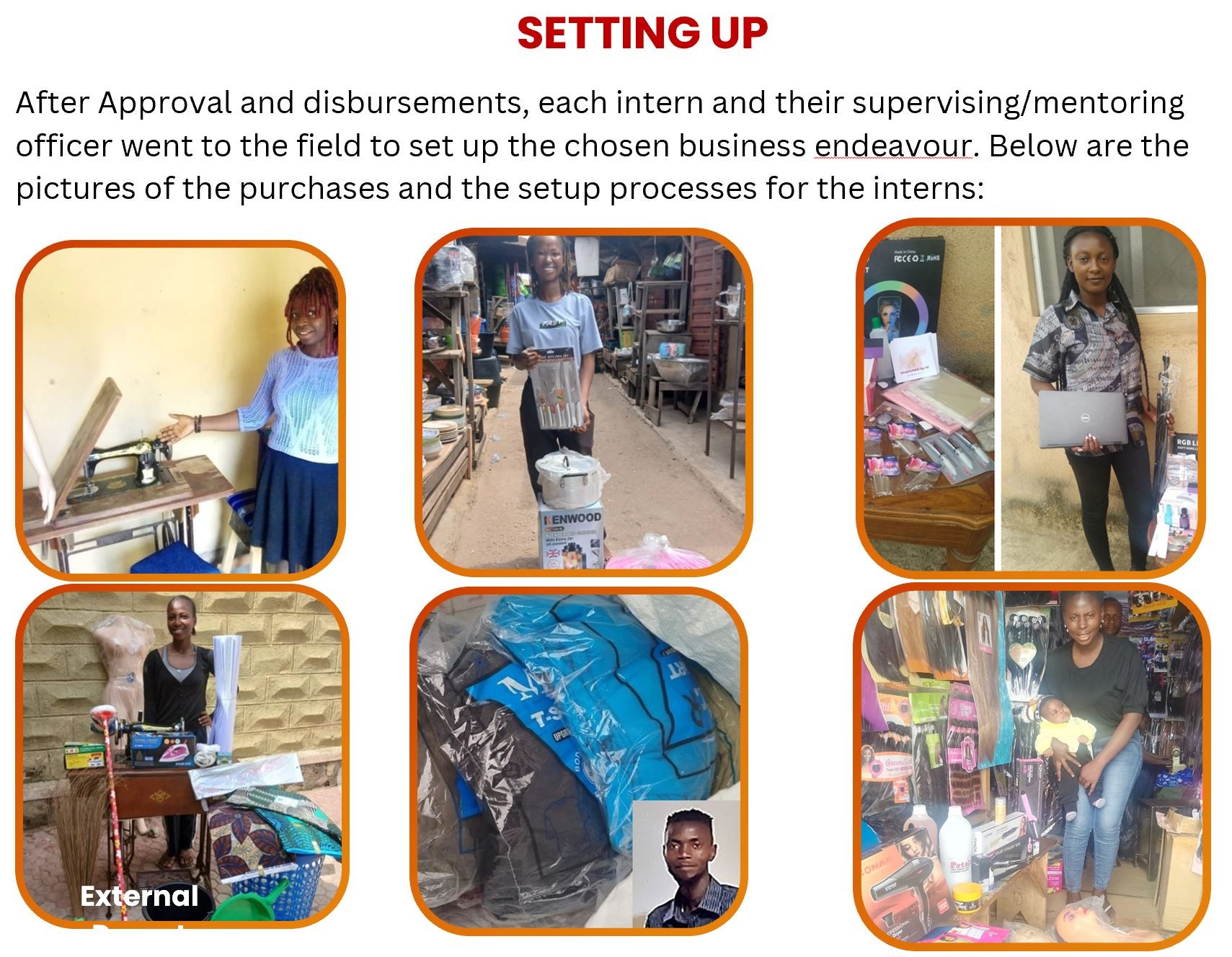
After Approval and disbursements,
each intern and their supervising/mentoring officer went to the field to set up
the chosen business endeavour. Below are the pictures of the purchases and the
setup processes for the interns:
PHASE
FIVE: MONITORING, EVALUATION AND INDEPENDENCE
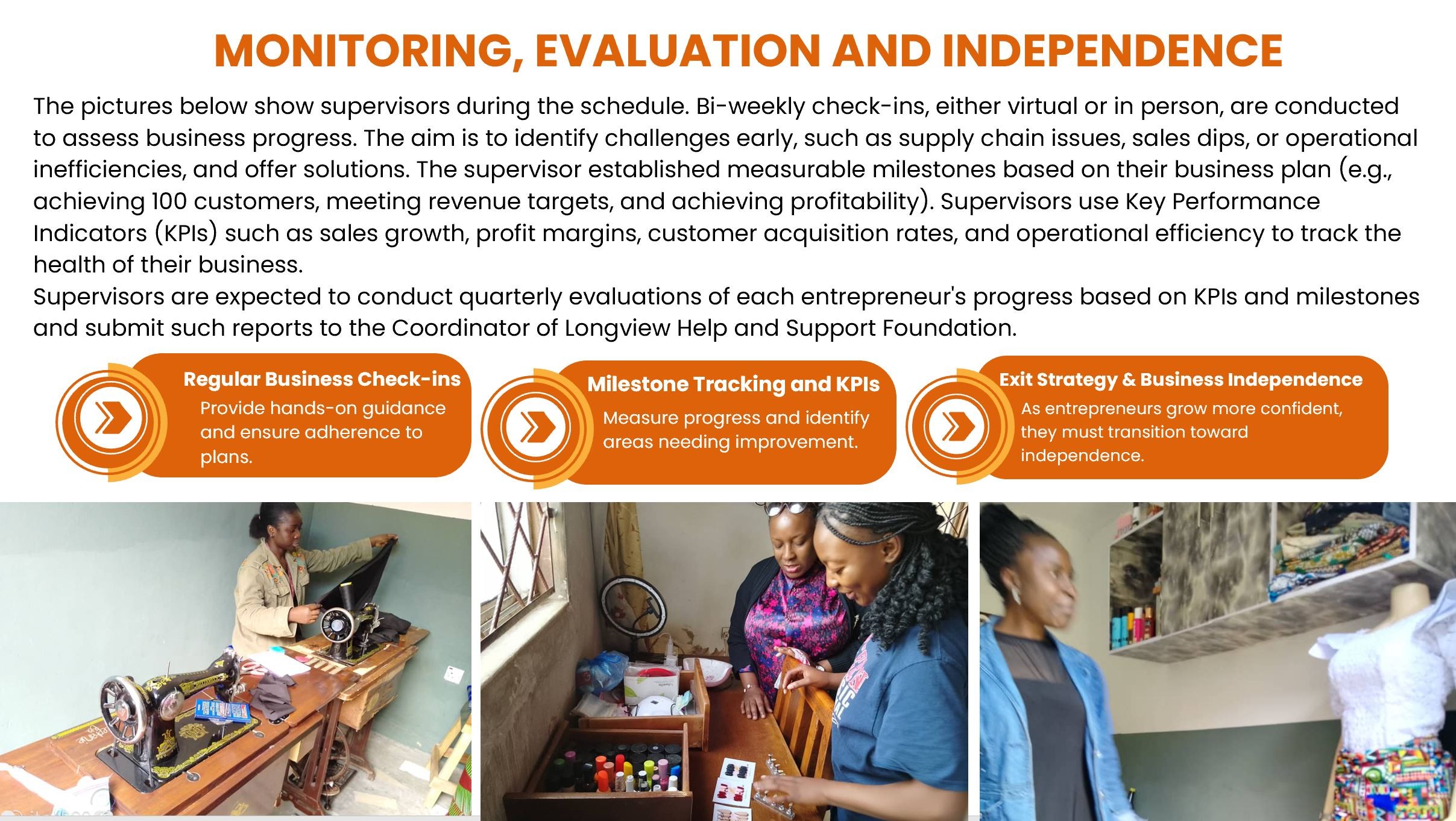
Bi-weekly check-ins, either
virtual or in person, are conducted to assess business progress. The aim is to
identify challenges early, such as supply chain issues, sales dips, or
operational inefficiencies, and offer solutions. The supervisor established measurable
milestones based on their business plan (e.g., achieving 100 customers, meeting
revenue targets, and achieving profitability). Supervisors use Key Performance
Indicators (KPIs) such as sales growth, profit margins, customer acquisition
rates, and operational efficiency to track the health of their business.
Supervisors are expected to
conduct quarterly evaluations of each entrepreneur's progress based on KPIs and
milestones and submit such reports to the Coordinator of Longview Help and
Support Foundation.
Gallery
Related Case Study